



Blog
Updates and news from Be Waste Wise and beyond
Communicating About Waste To Create An Engaged Global Community
March 5, 2015 | be Waste Wise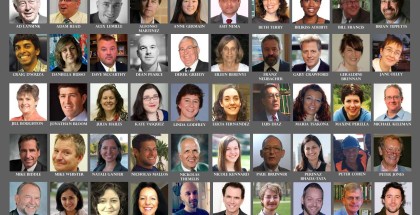
Inaccessible Expertise
In 2013, I was at World Bank’s Headquarters in Washington, D.C. to attend a forum on waste management. That day, in a single room, I was surrounded by so many world class experts that I felt I was … Read More
Making Circular Economy Truly Global
February 26, 2015 | be Waste Wise
The Concept
Circular Economy (CE) refers to the concept of using closed loop cycles in our current global system to ensure continuous material flow in closed loops. This also harnesses the resilience of biological cycles. The concept of closed loop … Read More
Covering your Tracks: Why Landfills are a Necessity in Developing Nations
February 19, 2015 | be Waste Wise 2
Landfills–what image does this word startle into your mind?
Is it a landscape smeared with trash, piled high in the blistering heat of the Sun, with tires and plastic bags, old T-shirts and banana peels? With waves of toxic gases spiraling off, the smelly sock odor burning your eyes and the thickness of the air constricting your lungs? In fact, this is a negative connotation.Read More
Father of Waste Hierarchy Talks About Circular Economy and Zero Waste
December 10, 2014 | be Waste Wise 12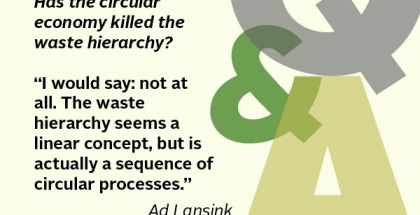
In this interview, the Father of waste hierarchy – Ad Lansink – responds to questions like whether the circular economy has killed the waste hierarchy, and others.Read More
The Father of Waste Hierarchy Talks About the Current Status of Waste Management Worldwide
November 14, 2014 | be Waste Wise 2
Ad Lansink is a former Dutch politician and the father of the waste hierarchy. Isonomia’s Steve Watson conducted an interview with Ad Lansink based on questions submitted by be Waste Wise’s community. This is the first of two installments of the interview. In the second installment, which will be published on 28th, November, Ad and Steve talk about circular economy and zero waste.Read More
Ask Ad Lansink, inventor of #LansinkLadder, about waste management
September 17, 2014 | be Waste Wise 2
Submit your questions on waste management policies and solutions to us and Ad Lansink, inventor of the waste management hierarchy, will answer.Read More
Zero waste versus zero landfill
August 26, 2014 | be Waste Wise
Peter Jones and Maxine Perella discuss about Zero waste versus zero landfill and what should circular economy thinkers realistically aspire to.Read More
Igniting Circular Economy into action
July 16, 2014 | be Waste Wise 2
Watch our panelists James Greyson (BlindSpot Think Tank) and Geraldine Grennan (EPSRC) discuss Igniting Circular Economy into Action with Maxine PerellaRead More
Making Circular Economy truly global
July 15, 2014 | be Waste Wise 3
Watch Christian Rudolph (nextcycle), Alex Lemille (Wizeimpact), and Adam Minter (Junkyard Planet) discuss making circular economy truly global with Maxine PerellaRead More
Untangling behavioural drivers behind food waste
June 15, 2014 | be Waste Wise 1
Why do apparently rational consumers waste so much food? The drivers behind food waste are complex and include food pricing, logistical and storage issues.Read More
Drivers and barriers to waste management in India and Nigeria
June 11, 2014 | be Waste Wise 1
Watch Thomas Vogler and Edith Iriruaga discuss the barriers and drivers for improving waste management in India and Nigeria.Read More
Short-lived climate pollutants: Public Health, Climate Change & Waste
June 10, 2014 | be Waste Wise 1
Watch Dr. Nimmi Damodaran and Gary Crawford discuss the impact of short-lived climate pollutants from waste management on climate change and public health.Read More
Waste collection systems in developing countries
June 5, 2014 | be Waste Wise 1
Watch Dr. Linda Godfrey, Maria Tsakona and Dr. Sanjay Gupta talk about improving waste collection systems in developing countries.Read More
Relevance of landfills in developing countries
June 4, 2014 | be Waste Wise 1
Watch Sandra Cointreau, Derek Greedy and Asit Nema discuss the Relevance of landfills in developing countries – Public Health & Quality of Life themeRead More
After 3R’s, recover energy from waste or landfill?
May 30, 2014 | Dan Hoornweg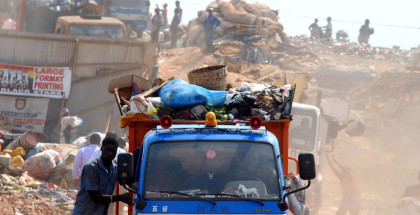
An “either/or” scenario between energy from waste and landfilling is rare. They must co-exist in an integrated system – Dan Hoornweg; Perinaz Bhada-Tata.Read More
Food waste disposers can mitigate climate change and reduce costs
May 22, 2014 | Craig Dsouza 1
For climate change mitigation, food waste disposers are better than composting, waste-to-energy and landfilling. Their wider adoption calls for integrated decision making encompassing solid waste management and wastewater.Read More
Communicating Waste
May 7, 2014 | be Waste Wise
Waste professionals are modern day alchemists! Alchemists tried turning base metals into gold. Waste managers are turning “waste” into resources everyday. But, their work and waste management in general don’t get deserved attention from the wider community. This lack of recognition not just…Read More
The 2014 be Waste Wise 30 – Individual Waste Influencers
May 1, 2014 | be Waste Wise 1
30 individuals who are effectively sharing stories about their work, insights about the waste industry and solutions. We call them Waste Influencers.Read More
Food waste disposal units – is the jury still out?
April 21, 2014 | be Waste Wise 2
Watch Prof. Adam Read, Dr. Tim Evans and Michael Keleman discuss the relevance and sustainability of food waste disposal units.Read More
Appetite for reduction? Behaviour change and food waste
April 21, 2014 | be Waste Wise 2
Watch Phillip Ward, Julia Hailes, Jonathan Bloom, and Dean Pearce discuss Behaviour Change and Food Waste as part of the 2014 Global Dialogue on Waste.Read More
Tell us your Circular Economy priorities, new job and other updates: February, 2014 Newsletter
February 24, 2014 | be Waste WiseApply for Online Community Builder job, take a quick survey and watch/read Advice for Solving Plastic Pollution.Read More
Advice for solving plastic pollution
February 20, 2014 | be Waste Wise
“There are solutions out there. If we can put a man on the moon and send rovers to mars, we can solve plastic pollution.” ~ Bill FrancisRead More
Are bio-plastics a solution to ocean garbage patches?
February 20, 2014 | be Waste Wise 2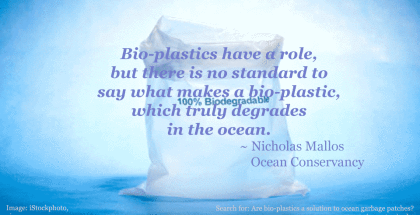
“Bio-plastics have a role, but there is no standard to say what makes a bio-plastic which truly degrades in the ocean.” ~ Nicholas MallosRead More
Is the Ocean Cleanup Array Viable?
February 20, 2014 | be Waste Wise 2
“They should consider designing it to work at a river mouth or even upstream where there is a potential concentrated plastic pollution source.” ~ Bill FrancisRead More
Why cannot we just clean up all plastic in the oceans?
February 20, 2014 | be Waste Wise 2
“The oceans are so huge. Cleaning them up is like sifting the Sahara desert by using a kitchen strainer.” ~ Bill FrancisRead More
What can each of us do to reduce plastic pollution?
February 20, 2014 | be Waste Wise 2
“As I learned more and more about plastic recycling, I discovered that it has its own drawbacks. So, I started reducing my own personal plastic as the first step .” ~ Beth TerryRead More
How much plastic is in the oceans?
February 20, 2014 | be Waste Wise 1
“Out of 700 sea water samples from all over the world – Indian Ocean, North and South Atlantic, the Sargasso Sea, the Antarctic, South and North Pacific – only 3 samples were plastic-free.” ~ Bill FrancisRead More
Can one person really make a difference to plastic pollution?
February 20, 2014 | be Waste Wise 4
“When people see you do it, it becomes part of the norm. So, take your own bag to the store and bring your own bottles.” ~ Beth TerryRead More
Difference between Plastic Pollution and Marine Debris
February 20, 2014 | be Waste Wise 2
“Plastic pollution isn’t just about plastic in the oceans but the entire life-cycle of plastics, from when it’s first made, through all the pathways until it becomes plastic pollution” ~Nicholas MallosRead More
The 2014 Global Dialogue on Waste and other Updates: January, 2014 Newsletter
January 22, 2014 | be Waste WiseThe 2014 Global Dialogue on Waste starts on March 1st, 2014. In 2013, we amplified 20 hours of dialogue into 500 hours of waste solutions education.Read More
Amplifying Voices to Bridge the Waste Solutions Expertise Gap – Results from our 2013 Global Dialogues on Waste
January 3, 2014 | be Waste Wise 1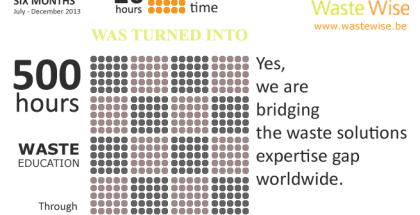
Through our 2013 global dialogues on waste, we amplified 20 hours of time from the best in waste into 500 hours of education. Twenty seven experts from…Read More
Compatibility Between Recycling and Waste-to-Energy
December 7, 2013 | be Waste Wise 11
This panel addressed the role of waste-to-energy (if any) in the waste management hierarchy of North America and Europe, provided international experience on the degree of compatibility between recycling and waste-to-energy, analyses the arguments for the juxtaposition of waste-to-energy and recycling, and discusses the policies adopted in some communities to build successful sustainable waste management systems, with the general aim of moving away from landfills.Read More
Making the Spittelau Waste-to-Energy Plant Possible
November 19, 2013 | be Waste Wise 1
During discussions and debates, environmentally competent people showed that the facts are for waste-to-energy through a thorough analysis. But, the public acceptance was still at stake, so the Mayor asked Friedensreich Hundertwasser, a famous Austrian artist if he could do something about the appearance of the Spittelau plant. Friedensreich Hundertwasser then took an year to discuss and check his spirit and conscience about the request and finally accepted to do it. He then wrote a long letter explaining why he decided to do so. A qualified public opinion poll conducted later showed that almost 50% were in favor of the Spittelau waste-to-energy plant. About 47% or so, had no opinion and only 3% were actually opposing it.Read More
Why are Recycling Rates Higher in Communities with Waste-to-Energy?
November 19, 2013 | be Waste Wise 2
The major reason why you see higher recycling rates in areas with waste-to-energy compared to those that don’t is basically the state and local policy environment. To just make the decision to move to waste-to-energy facility there has to be a lot of studies of feasibility, including understanding the waste stream, thinking through what the different streams of waste you have. How can you best maximize those streams? The kind of planning that goes into this type of a facility really engages the whole gamut of the waste management stream. So, those localities, and solid waste districts that have sited or are looking at moving to waste-to-energy as one part of their waste disposal strategy are also engaged in an integrated waste policy initiative.Read More
Plastics and Green House Gas Emissions from Waste-to-Energy
November 19, 2013 | be Waste Wise 2
“After doing the material and energy balances for waste-to-energy in the city of Vienna, we found that by providing both district heating and electricity, waste-to-energy in Vienna reduces the equivalent of 1.4 tonnes of CO2 emissions compared to landfilling with recovery of some landfill gas for electricity generation. So, 1.4 tonnes of CO2 can be saved by 1 tonne of municipal residual waste going into the waste-to-energy facility in Vienna.”Read More
Program Barriers to Waste-to-Energy Adoption
November 19, 2013 | be Waste Wise 4
“Some U.S. liberal groups like the Center for American Progress are beginning to realize that times have changed, the science has changed, and that we’re contributing to climate change by landfilling so much of our waste, and that waste-to-energy is actually a way of reducing climate change. So, if more environmental groups that provide information and messaging to liberals take a closer look at the science, I think that we can begin to move the conversation in a little more productive way.”Read More
Environmentalists’ Opposition to Waste-to-Energy
November 19, 2013 | be Waste Wise 4
A lot of it has to do with U.S. history around science and the birth of environmental science in the 1970’s with Rachel Carson’s book Silent Spring and the revelation that chemicals in the environment maybe poisoning us without our knowledge. That caused a political split in our conversation between environmentalists on the political left and the chemical and petroleum industries which moved to the political right. And, we see that alignment existing even to this day.Read More
Correlation Between Recycling Rates and Waste-to-Energy
November 19, 2013 | be Waste Wise 5
In the last 15 years, waste-to-energy as the percentage of waste generated has come down. Starting from 19% in 1995 down to about 12% of the waste now. So, we’ve actually gone backwards in terms of waste-to-energy. Recycling has gone up, from about 25% to about 34% from 1995. But that’s not a huge increase either in 15 years! If you add these two rates, the waste that’s converted to energy and waste that’s recovered by recycling hasn’t changed in the last 15 years. We’re still landfilling about 54-55% of waste.Read More
Waste-to-Energy in the Waste Management Hierarchy
November 9, 2013 | be Waste Wise 3
Waste-to-Energy is a strategy that many cities with dense population, have issues with landfilling, and want to decrease waste transportation distances are using and continue to look at. Waste-to-energy is also a technology that has been evolving over the years and there are many new developments in this technology, moving in mainly one direction – to be able to applied to smaller size waste streams. Not only is it a strategy that has real importance for the current public policy, it is a strategy that will definitely present itself to additional areas.Read More
Commercial Waste Recycling Policy in the United States
October 22, 2013 | be Waste Wise 6
CONTRIBUTORSRead More


Pay As You Throw Policy in the United States
October 22, 2013 | be Waste Wise 2
CONTRIBUTORSRead More
Methods to Increase Participation in Recycling
October 21, 2013 | be Waste Wise 2
CONTRIBUTORSRead More
Focus for Municipal Policy to Increase Recycling
October 21, 2013 | be Waste Wise 2
CONTRIBUTORSRead More

Twitter Testimonials
October 7, 2013 | be Waste Wise
We are here because of our community. Read what they are saying about us, and share what you agree with…Read More
Comments Invited: India’s New Municipal Solid Waste (MSW) Rules
October 7, 2013 | be Waste Wise
Until 28th October, 2013, you can submit your comments on India’s new Municipal Waste (Management & Handling) Rules, 2013 (Draft) to its Ministry of Environment and Forests. Details…Read More
Integrating the Informal Waste Recycling Sector in Latin America
October 3, 2013 | be Waste Wise 7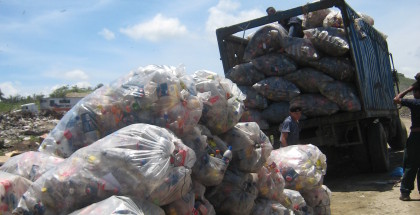
“When designing solutions for inteftrating informal waste recycling, we need an adequate understanding of how the overall system is currently working including both formal and informal elements”. – Jane Olley
This panel explored how solid waste management is different in the Global South, and in particular in Latin America and the Caribbean, and considers the benefits of integrating the informal sector into municipal waste management strategies.Read More
